May 20, 2026
Determining whether to nurse a sick tree back to health or let it go is a common dilemma for homeowners in Pittsburgh, PA and the surrounding area. Trees provide shade, aesthetic beauty, and environmental benefits, making them valuable assets to any property. However, when a tree begins to show signs of distress, it can quickly transition from a landscape highlight to a significant safety concern. Deciding on the best course of action requires a careful look at the severity of the illness and the potential risks involved in keeping the tree standing. Understanding the indicators of decline helps property owners make informed choices about their greenery.
Assessing the Overall Extent of Internal Decay
The internal structure of a tree is what provides its strength and flexibility during high winds and storms. If the heartwood or the main trunk begins to rot, the tree loses its ability to support its own weight. Identifying decay is not always easy from the outside, but certain indicators like large cavities, shelf-like fungi growing on the bark, or "punky" wood are clear red flags. According to Today's Homeowner, a tree that's more than 50% decayed or damaged may need to be removed. When decay reaches this critical mass, the risk of a sudden collapse increases exponentially, making it a priority for a tree removal business to assess the situation.
Internal rot often starts small but can spread rapidly through the vascular system of the plant. While some minor hollows are normal and can even provide habitat for local wildlife, a large hollow that compromises more than a third of the trunk's circumference is a major structural defect. In the Pittsburgh area, where heavy snow and ice can weigh down branches, a compromised trunk is a recipe for disaster. Homeowners should look for vertical cracks or seams in the bark, as these often indicate that the internal wood is pulling apart. If the structural integrity is gone, the most responsible path is to contact a tree removal business to prevent property damage.
Evaluating the Health and Density of the Canopy
The canopy acts as the lungs of the tree, and its appearance is a direct reflection of the tree's internal health. A healthy tree should have a full, vibrant crown with leaves that are the appropriate color for the season. If you notice that one side of the tree is thriving while the other side is completely bare, it usually indicates a root problem or a localized disease that is cutting off the flow of nutrients. Dead branches at the very top of the tree, a condition known as dieback, are another sign that the tree is under intense stress and may be beyond saving by a tree removal business or an arborist.
Another factor to consider is the presence of epicormic sprouts, which are small, thin shoots that grow out of the trunk or the base of the tree. These "suckers" are the tree's way of trying to survive when the main branches are no longer functioning correctly. While they might look like new growth, they are actually a sign of extreme distress. If more than half of the canopy is dead or showing signs of thinning, the tree is likely in its final stages of life. At this point, keeping the tree becomes a liability, and a tree removal business should be consulted to clear the space for a healthier specimen.
Examining the Root System for Ground Stability
Roots are the foundation of any tree, providing both nutrients and physical stability. Because they are mostly underground, root issues are often the most difficult to diagnose until it is too late. One clear sign of root trouble is the appearance of mushrooms or fungal growth around the base of the trunk. This usually indicates that the roots are rotting away, leaving the tree anchored by nothing more than gravity. If you see the soil heaving or lifting on one side of the tree, it means the roots are no longer holding firm, and the tree is at an immediate risk of falling. This is a critical situation that requires a tree removal business.
Construction or soil compaction can also damage roots, leading to a slow decline over several years. If you have recently performed landscaping or driveway work near a tree, the impact on the root zone could be the cause of its current sickness. Unlike branches, which can be pruned, a failing root system is almost impossible to repair. Once the connection between the tree and the earth is broken, the tree becomes a ticking time bomb. Enlisting a tree removal business to handle a tree with root rot is the safest way to ensure that the tree does not end up falling on a power line or a neighboring structure during a storm.
Considering the Proximity to Home and Utilities
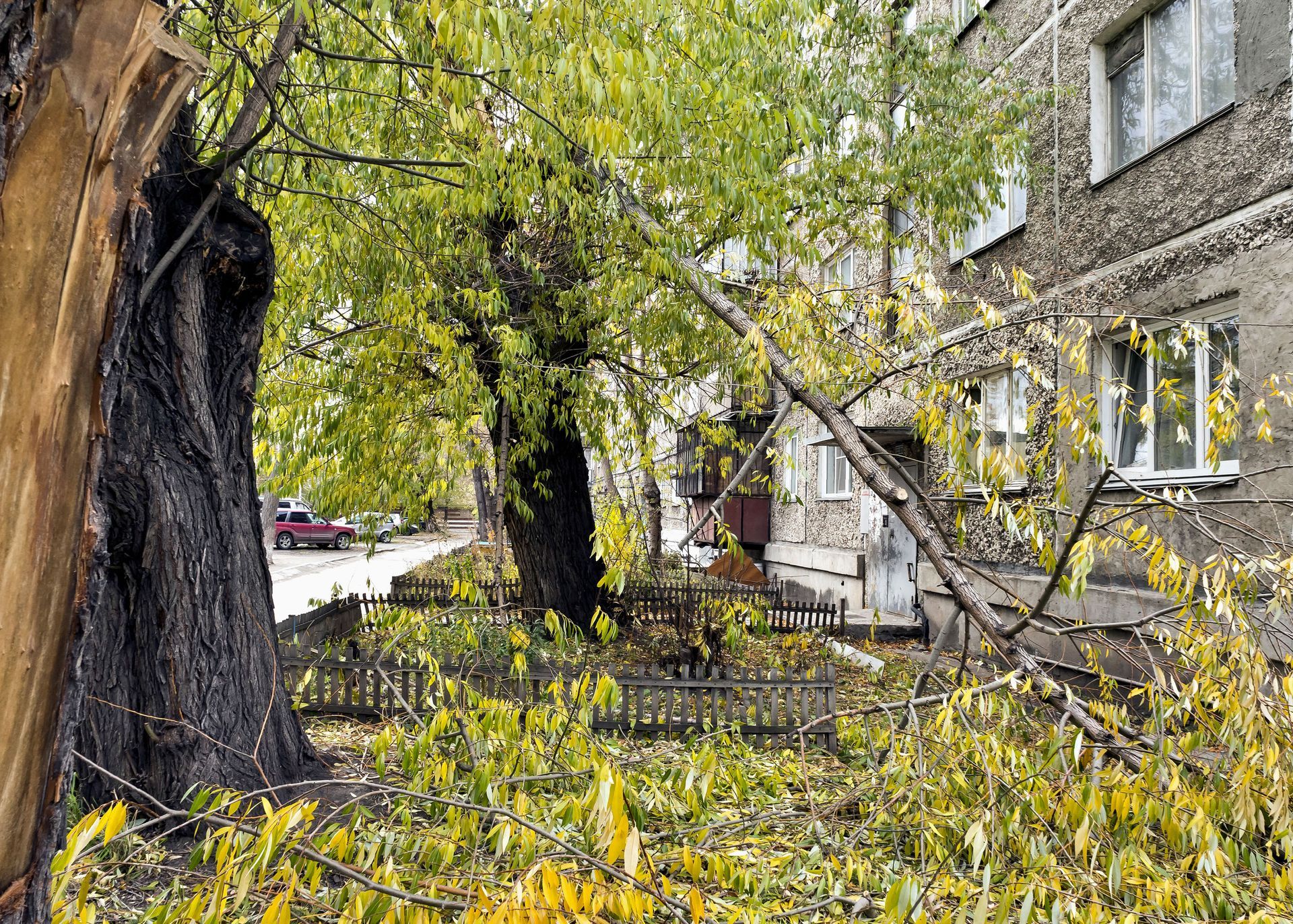
The location of a diseased tree is just as important as the severity of the disease itself. A sick tree in the middle of a vast forest is a natural part of the ecosystem and can be left to fall on its own. However, a sick tree located near a house, a garage, or a public sidewalk is a different story entirely. If a tree is leaning significantly toward a structure or overhanging a driveway, its potential for causing harm is much higher. In these cases, even a mildly diseased tree might need to be taken down by a tree removal business to eliminate the threat of injury or costly repairs.
Power lines are another major consideration for homeowners in the Pittsburgh area. Trees that are growing into or near utility lines require specialized care. If a diseased tree is close enough to interfere with electricity or communication lines, the local utility company or a professional tree removal business must intervene. Allowing a weakened tree to remain near these lines increases the risk of fires or widespread outages during inclement weather. Safety must always be the primary driver when deciding whether a tree stays or goes, especially when the tree is within striking distance of high-traffic areas or essential infrastructure.
Deciding the fate of a diseased tree is never easy, but focusing on the facts of the situation makes the process much clearer. By looking at the extent of decay, the health of the canopy, and the stability of the roots, you can determine if the tree is a candidate for recovery or a necessary project for a
tree removal business. Protecting your property and the safety of those around you is the most important factor in this decision. Whether you choose to treat the tree or remove it, taking action sooner rather than later is always the best way to prevent accidents and maintain the beauty of your landscape.
If you are unsure about the health of the trees on your property, TreeSpire is here to help you navigate the best options for your yard. We offer expert assessments and efficient solutions for homeowners throughout Pittsburgh, PA and the surrounding area. We can evaluate the structural integrity of your trees and help you decide if it is time for professional intervention. Contact us today to learn more about our services and how we can help you maintain a safe and beautiful outdoor space.